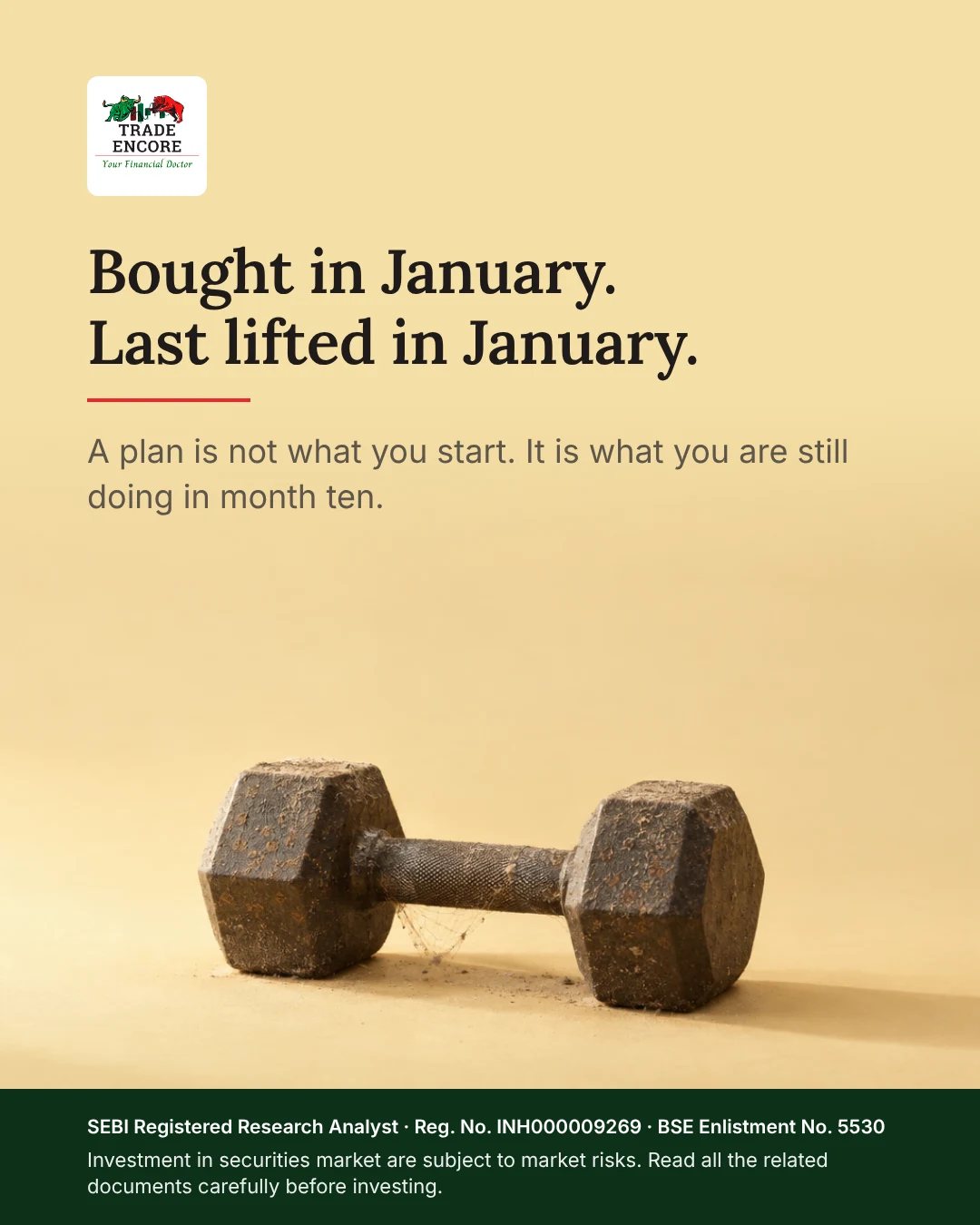
Every January the gym fills up. New shoes, a new membership, a new dumbbell for the corner of the bedroom. By March the crowd has thinned, and by June the dumbbell is holding a cobweb. Nobody quit on purpose. A busy week came, then another, and the habit quietly stopped.
Investing plans die the same way. Not with a decision, but with a skipped month.
Starting is the easy part
Opening a monthly investment plan takes ten minutes and feels good. Keeping it going through a job change, a wedding, a hospital bill and a falling market takes years, and feels like nothing at all. That is why so many plans that start with enthusiasm are quietly paused before they have had time to work.
The arithmetic of regular saving rewards the months you keep, not the day you begin. Time does the heavy lifting, and time only helps the money that stays in. You can see this for yourself in The Snowball, our free game: move the sliders and watch what a few skipped or delayed years do to the end of the line.
Why plans stop
- The amount was set on a good day. A figure that is easy in a bonus month becomes heavy in a tight one, and the plan is the first thing cut.
- It depends on remembering. A plan that needs a decision every month gives you a chance to say "next month" every month.
- The market falls and it feels wrong to keep going. Yet a fall is exactly when a regular plan buys more for the same money. Stopping then keeps the expensive months and skips the cheap ones.
- It is checked too often. Looking at it daily turns ordinary ups and downs into reasons to tinker.
How to make a plan you will still be keeping in month ten
1. Size it for your worst month, not your best
Pick an amount you could keep paying in a lean month. A smaller plan that never stops does more than a bigger one that stops in March. You can raise it later, when your income does.
2. Take the decision out of it
Set the money to move on the day your salary arrives, before you have a chance to spend it. Pay yourself first, and let the rest of the month adjust to what is left.
3. Decide now what you will do when markets fall
Write it down while you are calm: "If prices drop sharply, I keep the plan running." A decision made in advance is far easier to keep than one made in the middle of bad news.
4. Review it once a year
Once a year, check whether the plan still fits your goal and your income. In between, leave it alone. A plan, like a habit, gets stronger by being repeated, not by being watched.
The test that matters
A plan is not what you start. It is what you are still doing in month ten. If yours has gone quiet, the fix is not a bigger plan or a cleverer one. It is the same plan, sized so you can keep it, set to run without you, and left alone long enough to work.
Want to see what consistency is worth in your own numbers? Try The Snowball, or work through The first salary in our Case Lab.
Trade Encore · SEBI Registered Research Analyst · Registration No. INH000009269 · BSE Enlistment No. 5530 · Registered office: C/O ScaleUp CoWork, Ground Floor, KBC Building, DG Dani Road, Law College Road, Deccan, Pune — 411004.
Investment in securities market are subject to market risks. Read all the related documents carefully before investing.
Registration granted by SEBI, membership of a SEBI recognized supervisory body (if any) and certification from NISM in no way guarantee performance of the intermediary or provide any assurance of returns to investors.
Non-personalised research: This article is investor education. It is identical for every reader and is not based on your holdings, financial situation, risk profile or investment objectives. It names no security and is not a recommendation or investment advice. Consider your own circumstances before acting.
AI use: The wording of this article was drafted with an AI writing assistant (Claude, made by Anthropic) and read and approved by the research analyst before publication. The picture in the graphic was made with AI.